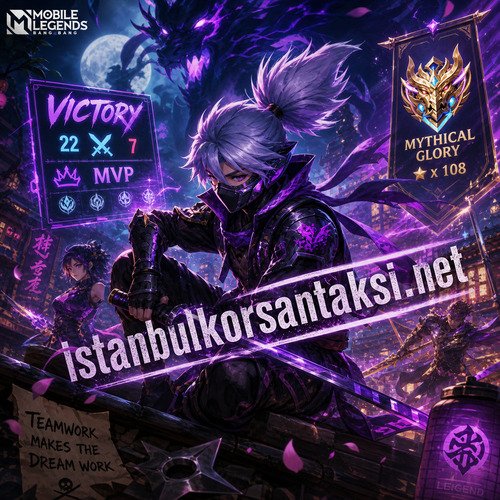
istanbulkorsantaksi.net – Mobile Legends: Bang Bang is one of the most recognized mobile multiplayer games in the world. It has gained enormous popularity because it brings the excitement of multiplayer online battle arena gameplay to smartphones in a way that is both accessible and competitive. For many players, the game begins as a casual hobby, but over time it becomes a skill-based challenge that requires practice, teamwork, and strategic thinking.
The reason Mobile Legends remains appealing for so many players is that every match feels different. Even though the map stays the same and the goal never changes, the interactions between heroes, item builds, and team decisions create endless variety. Some matches are fast and aggressive, while others become slow strategic battles that are decided by a single team fight in the late game.
Because of this, understanding the game is about much more than memorizing hero skills. To truly improve, players need to understand how to control the map, cooperate with teammates, manage resources, and make better decisions under pressure. Learning these aspects transforms the game from simple entertainment into a competitive experience that rewards intelligence as much as reflexes.
Understanding the Structure of Mobile Legends Matches
At the center of every Mobile Legends match is one main objective: destroy the enemy’s base crystal before they destroy yours. Although this sounds straightforward, many players approach the game incorrectly by treating kills as the main focus.
Eliminating enemy heroes is helpful because it temporarily removes them from the map, but kills alone do not secure victory. The true progress of a match comes from taking objectives. These include destroying turrets, securing Turtle for extra resources, and defeating Lord to gain lane pressure.
The map is divided into three lanes, each protected by defensive towers. Players must destroy these towers one by one to reach the enemy base. This means controlling minion waves is crucial because they are necessary for pushing structures safely.
Players who understand objective-based gameplay often outperform mechanically stronger opponents who chase kills. The game rewards teams that know when to convert an advantage into structural progress. This is why strategic discipline is often more important than flashy individual plays.
Hero Selection and Team Composition
Before a match starts, players choose heroes. This stage can significantly influence the outcome because team composition determines how well a group can handle different situations.
Mobile Legends heroes are divided into several roles: Tank, Fighter, Assassin, Mage, Marksman, and Support. Each role serves a different purpose and contributes to the overall strategy.
Tanks provide durability and initiate fights. Fighters are versatile frontline damage dealers. Assassins focus on quickly eliminating high-value targets. Mages deal magical damage and often provide crowd control. Marksmen are ranged damage dealers who become stronger in the late game. Supports assist allies through healing, shielding, or utility skills.
A balanced team generally performs better than a team composed only of damage-oriented heroes. For example, a team without a tank may struggle to start team fights safely. A team without a marksman may lack consistent damage during the late stages.
Understanding team composition also helps players make better choices during hero selection. Sometimes choosing a hero that supports the team is more valuable than selecting a personal favorite.
The Importance of Farming and Resource Management
Gold and experience are essential in Mobile Legends because they determine how quickly heroes become stronger. Farming refers to collecting these resources efficiently by defeating minions, jungle monsters, and neutral objectives.
A player who farms well can buy important items faster than opponents. This creates a power advantage that can influence fights. On the other hand, players who neglect farming often fall behind and become less effective.
Jungle monsters are particularly important because they provide additional gold and buffs. The red and blue buffs enhance hero performance and can greatly affect the outcome of skirmishes.
Good resource management also means knowing when to stop farming and help the team. Spending too much time farming while ignoring objectives can waste opportunities. Strong players know how to balance personal growth with team responsibilities.
Early Game Fundamentals
The early game usually covers the first few minutes and establishes the pace for everything that follows. During this stage, players should focus on farming, staying alive, and avoiding unnecessary mistakes.
Lane players need to clear minion waves while maintaining safe positioning. Overextending can make them vulnerable to enemy rotations. Junglers must clear camps efficiently and watch for chances to assist teammates.
The first few minutes are often defined by small skirmishes around lanes or jungle entrances. Winning these early encounters can create momentum, but reckless aggression often leads to avoidable deaths.
The Turtle is the first major objective. Securing it provides additional gold to the team and can accelerate item progression. Teams that coordinate around Turtle often gain a noticeable advantage entering the mid game.
Mid Game and Map Control
The mid game begins once players have acquired several items and outer turrets start falling. This phase emphasizes map control and rotations.
Rotating means moving between lanes to support teammates, pressure objectives, or respond to enemy movements. Effective rotations create numerical advantages and make it easier to secure turrets.
Map control involves maintaining vision and denying enemy resources. Invading the enemy jungle after destroying turrets can significantly reduce their farming opportunities.
This phase is often where strong teams begin to separate themselves. A coordinated team can create pressure in multiple lanes while controlling neutral objectives. A disorganized team may struggle to respond and gradually lose control.
Late Game and High-Stakes Decisions
In the late game, heroes are close to full build, and team fights become extremely important. Death timers are long, meaning a single mistake can lead directly to defeat.
Players need to be more cautious during this phase. Overextending alone can result in being caught and leaving the team at a disadvantage.
Positioning is critical. Marksmen and mages should stay protected behind the frontline. Tanks must engage wisely and absorb key enemy abilities. Assassins need to wait for opportunities to strike vulnerable backline targets.
Late-game matches often revolve around Lord. Securing Lord gives the team a strong pushing force that can break through defenses and create game-ending opportunities.
Practice With a Limited Hero Pool
One of the fastest ways to improve is to focus on a few heroes rather than trying to play all of them.
By mastering a small group of heroes, players develop a deeper understanding of skill timing, damage output, and matchups. This makes it easier to perform consistently under pressure.
Once a player feels comfortable with several heroes in one role, expanding to additional roles becomes easier.
Learn to Adapt Your Build and Playstyle
Item builds should not always be identical from match to match. Adapting to enemy composition is an important skill.
If the enemy has strong magical burst, defensive magic items may be necessary. Against physical damage, armor becomes more valuable. Offensive heroes may also need situational items depending on the match.
Adaptability also applies to playstyle. A team that falls behind may need to focus on defense and farming. A team with an early advantage should pressure objectives aggressively.
Players who adjust to the situation are more successful than those who rely on fixed strategies.
Communication and Mental Discipline
Communication can dramatically improve performance. Using pings to signal missing enemies, objectives, or retreat commands helps coordinate with teammates.
Equally important is maintaining composure. Mobile Legends can be frustrating during losing streaks, but emotional decisions often make situations worse.
Players who stay calm can recognize comeback opportunities and make better decisions. A positive mindset also makes improvement easier because it encourages learning rather than blame.
Conclusion Mastering Mobile Legends: A Complete Look at How to Play and Improve in the Game
Mobile Legends: Bang Bang is a game that blends fast action with deep strategic gameplay. It may appear simple to newcomers, but beneath its accessible controls lies a system that rewards patience, knowledge, and teamwork.
To play effectively, players must understand objectives, hero roles, farming, and map control. Winning is not determined solely by mechanical skill but by the ability to make smart decisions throughout every phase of the match.
Improvement takes time, but the process is rewarding. By practicing specific heroes, focusing on objectives, and learning from mistakes, players can steadily become stronger. Every match offers an opportunity to refine skills and develop better habits.
What makes Mobile Legends so enduring is its constant variety. No two matches feel exactly the same, and that unpredictability keeps the game exciting for both casual and competitive players alike.